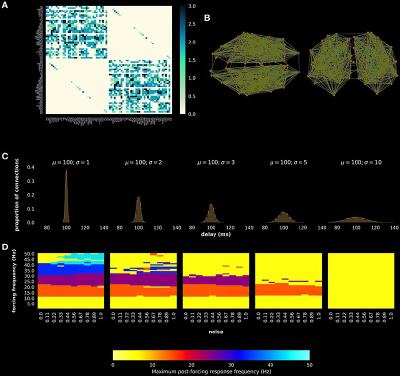
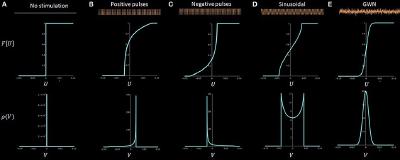
Rhythmic activity such as the alpha rhythm is one of the most prominent features of EEG and MEG recordings, yet how it is generated is still debated. We use corticothalamic and intracortical models to understand how brain rhythms arise, why they differ across brain regions, brain states (such as wake and sleep) and the lifespan, and how they interact with periodic brain stimulation through entrainment and resonance. We also study how rhythms relate to slower processes such as activity-dependent myelination and plasticity, and how they can serve as biomarkers in clinical populations.
Oscillations & Rhythms
Publications
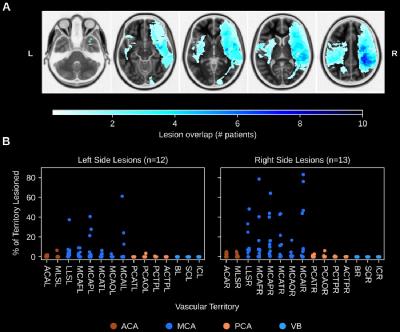
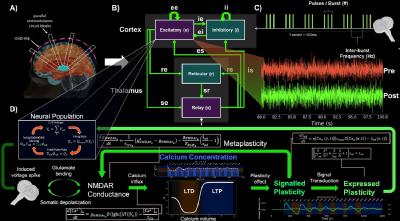
Alpha rhythm subharmonics underlie responsiveness to theta burst stimulation via calcium metaplasticity
Repetitive transcranial magnetic stimulation (rTMS) is a non-invasive technique to modulate brain activity, often used in treating …
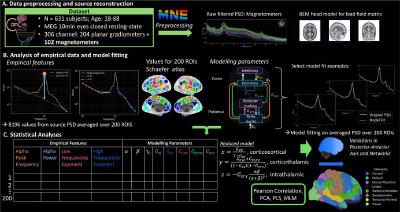
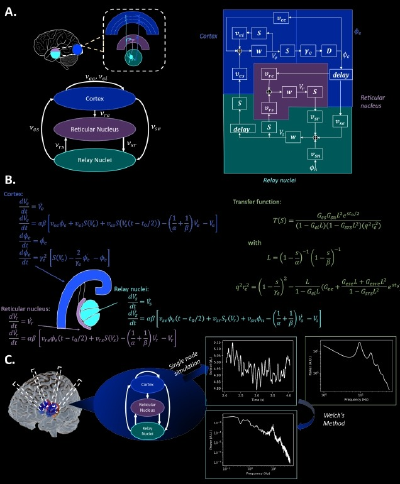
A comprehensive investigation of intracortical and corticothalamic models of alpha rhythms
Alpha rhythms are a robust phenomenon prominently observed in posterior resting state electroencephalogram (EEG) that has been shown to …
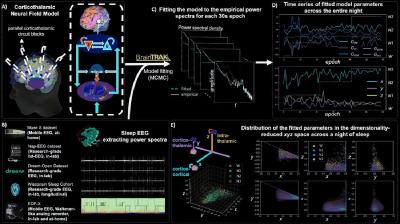
Corticothalamic modelling of sleep neurophysiology with applications to mobile EEG
Recent developments in mathematical modeling of electroencephalography (EEG) enable the tracking of otherwise-inaccessible …
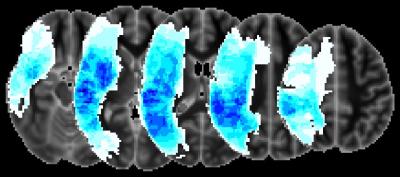
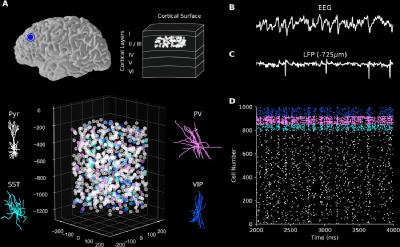
A connectome-based, corticothalamic model of state- and stimulation-dependent modulation of rhythmic neural activity and connectivity
Rhythmic activity in the brain fluctuates with behaviour and cognitive state, through a combination of coexisting and interacting …
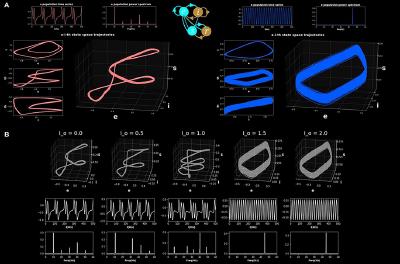
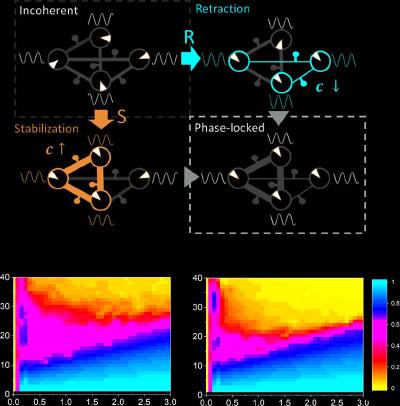
Shaping brain rhythms: dynamic and control-theoretic perspectives on periodic brain stimulation for treatment of neurological disorders
Rhythmic, collective activity is a fundamental feature of neural systems. As a result of this, many of the challenges and opportunities …
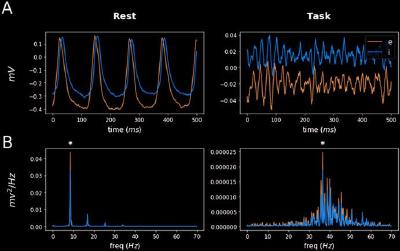
Persistent entrainment in non-linear neural networks with memory
A theoretical study on the phenomenon of persistent entrainment using a mean-field model of recurrent delayed inhibition