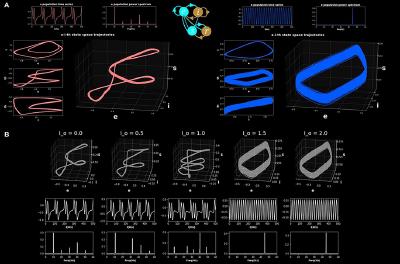
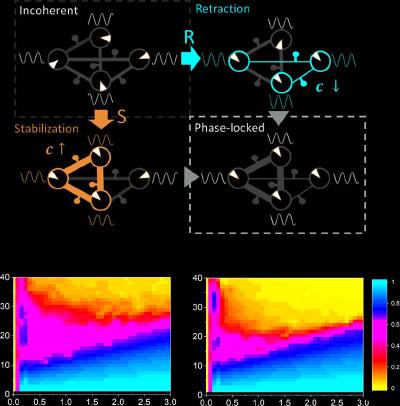
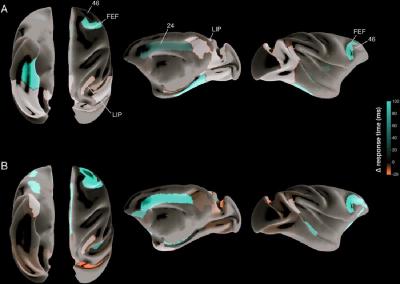
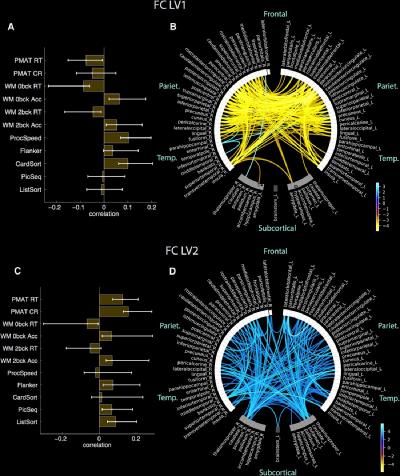
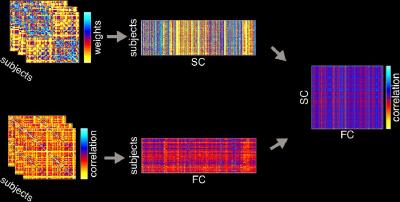
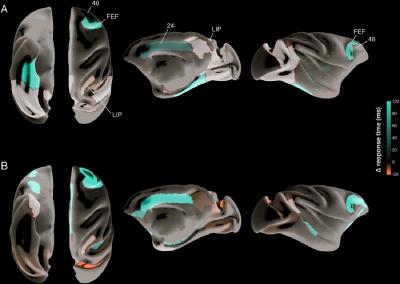
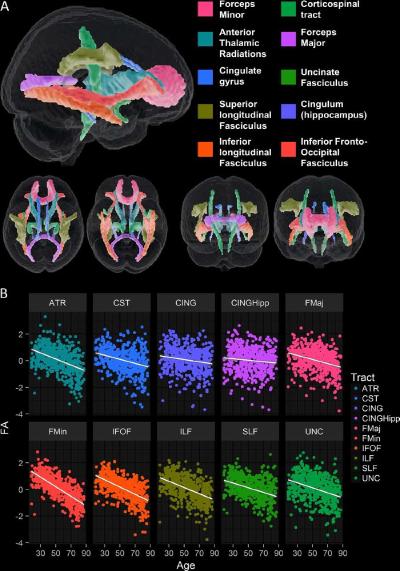
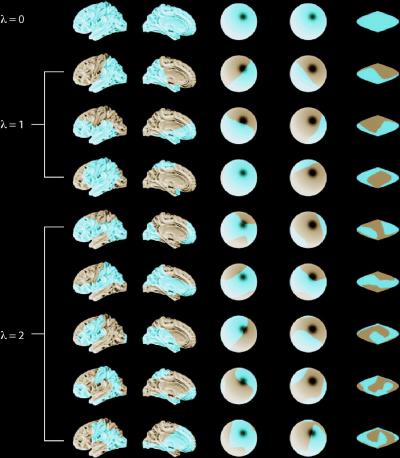
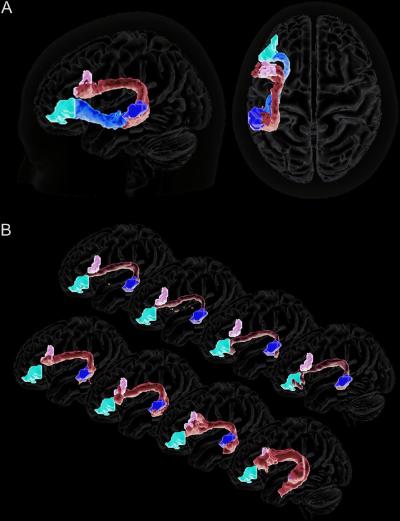
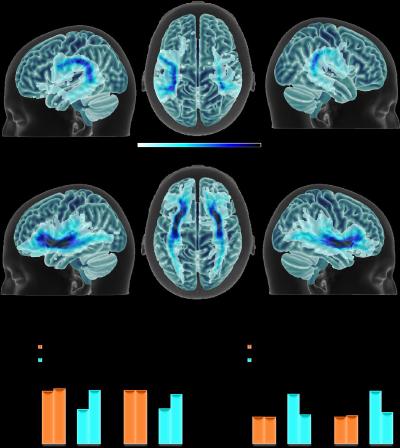
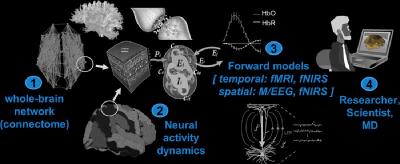
Brain activity unfolds on a physical network of white matter connections: the connectome. We study how this structure shapes and constrains large-scale brain dynamics, including how structural and functional connectivity relate to each other and to cognition, how stimulation and activity propagate through brain networks, how the geometry and eigenmodes of the cortex organize patterns of activity, and how network properties vary between individuals and across development. This work combines diffusion MRI tractography, resting-state fMRI, EEG/MEG and fNIRS with connectome-based models.
Network Structure & Dynamics
Publications
Developmental disinhibition gates language lateralization in childhood
Hemispheric specialization is a hallmark of brain organization, yet how functionally specialized circuits develop remains unclear. In …
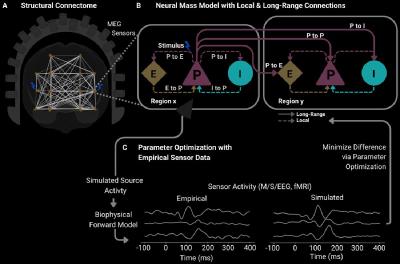
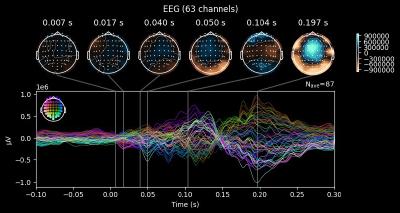
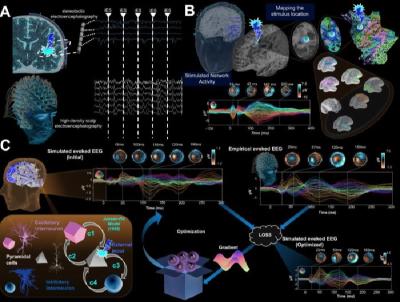
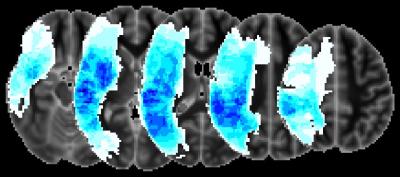
Stimulation mapping and whole-brain modeling reveal gradients of excitability and recurrence in cortical networks
The human brain exhibits a modular and hierarchical structure, spanning low-order sensorimotor to high-order cognitive/affective …
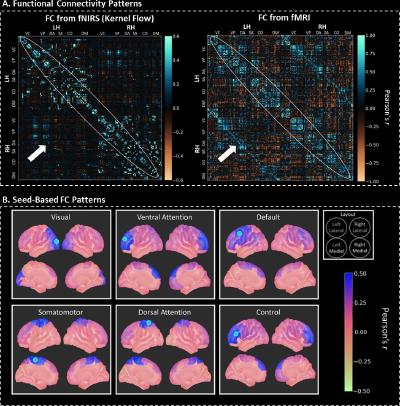
Assessing the Validity and Reliability of HD-DOT TD-fNIRS Resting-State Measurements in Rapid Succession Data Collection Settings
Functional magnetic resonance imaging (fMRI) has long been a cornerstone in the study of brain activity, but its high operational …
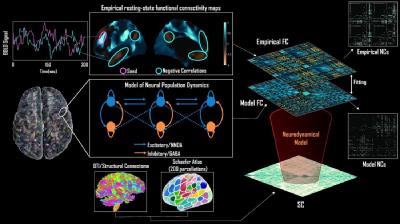
The role of inhibition in resting-state fMRI negative correlations
Resting-state brain activity, as observed via functional magnetic resonance imaging (fMRI), displays non-random fluctuations whose …
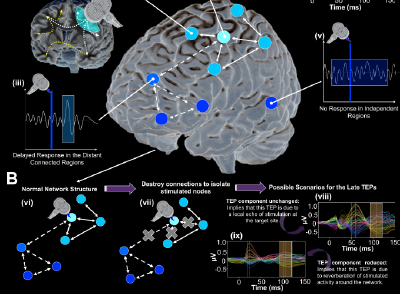
TMS-Evoked Responses Are Driven by Recurrent Large-Scale Network Dynamics
A major question in systems and cognitive neuroscience is to what extent neurostimulation responses are driven by recurrent activity. …
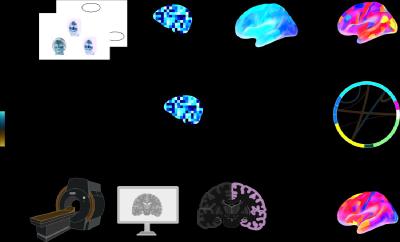
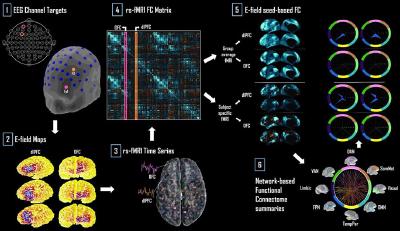
Mapping inter-individual functional connectivity variability in TMS targets for major depressive disorder
Transcranial magnetic stimulation (TMS) is an emerging alternative to existing treatments for major depressive disorder (MDD). The …
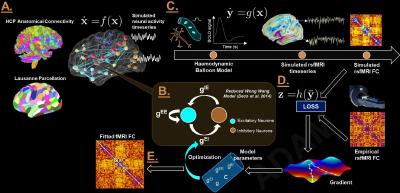
Deep-learning based parameter estimation for neurophysiological models of neuroimaging data
Connectome-based neural mass modelling is the emerging computational neuroscience paradigm for simulating large-scale network dynamics …
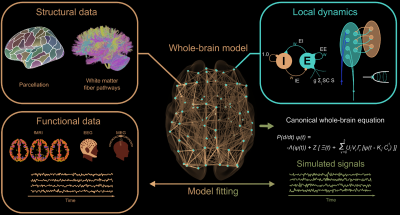
Whole-Brain Modelling: Past, Present, and Future
Whole-Brain Modelling is a scientific field with a short history and a long past. Its various disciplinary roots and conceptual …
A connectome-based, corticothalamic model of state- and stimulation-dependent modulation of rhythmic neural activity and connectivity
Rhythmic activity in the brain fluctuates with behaviour and cognitive state, through a combination of coexisting and interacting …