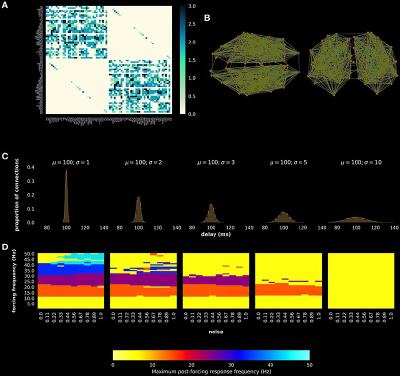
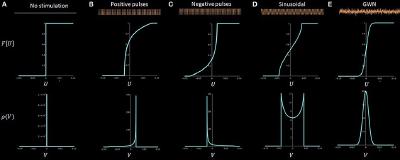
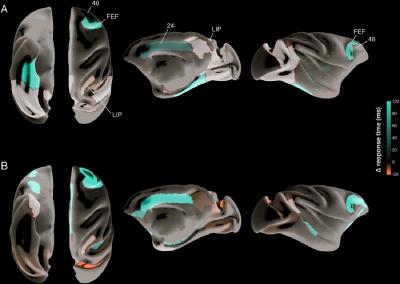
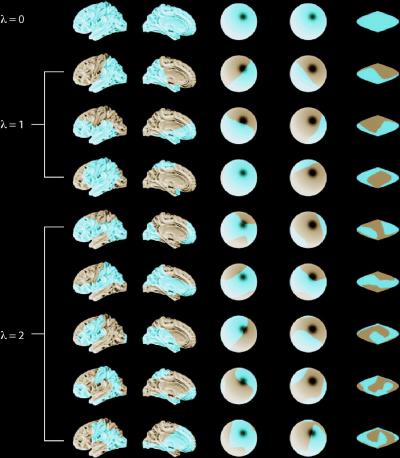
Computational modelling is the common thread running through almost all of our work. We develop and apply whole-brain (connectome-based) neural mass models, corticothalamic and neural field models, and detailed cortical microcircuit models, together with the mathematical theory needed to understand their behaviour. A major focus is methodology: fitting models to individual subjects’ EEG, MEG and fMRI data using deep-learning-based parameter estimation tools such as WhoBPyT, assessing how much individual-level information these models capture, and making whole-brain modelling more reproducible and accessible through open-source software, tutorials and courses.
Models & Theory
Publications
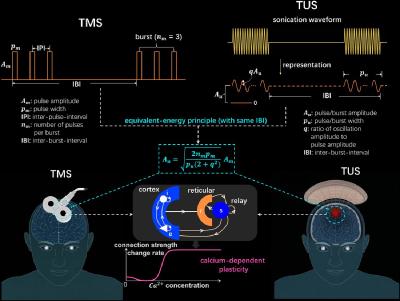
Unifying transcranial focused ultrasound and transcranial magnetic stimulation effects with calcium-dependent synaptic plasticity theory
Low-intensity transcranial focused ultrasound stimulation (TUS) is an emerging technology that shares features of both established …
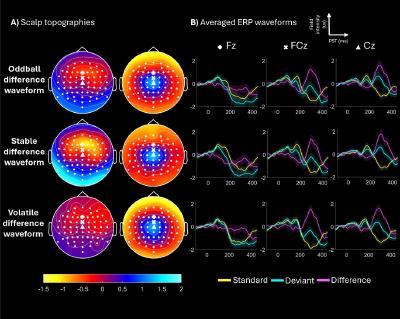
Developmental disinhibition gates language lateralization in childhood
Hemispheric specialization is a hallmark of brain organization, yet how functionally specialized circuits develop remains unclear. In …
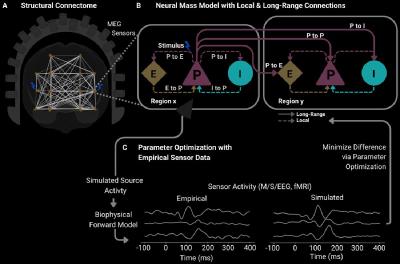
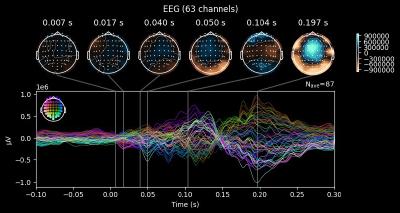
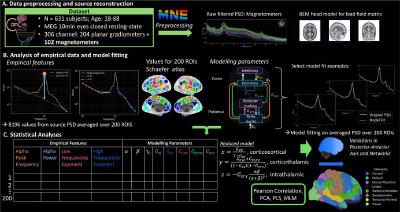
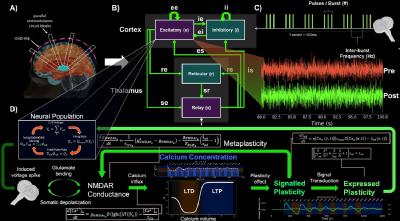
Alpha rhythm subharmonics underlie responsiveness to theta burst stimulation via calcium metaplasticity
Repetitive transcranial magnetic stimulation (rTMS) is a non-invasive technique to modulate brain activity, often used in treating …
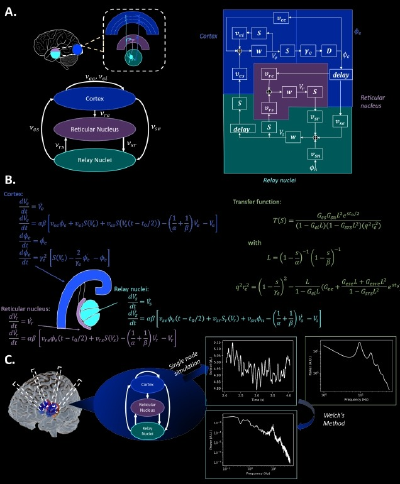
A comprehensive investigation of intracortical and corticothalamic models of alpha rhythms
Alpha rhythms are a robust phenomenon prominently observed in posterior resting state electroencephalogram (EEG) that has been shown to …
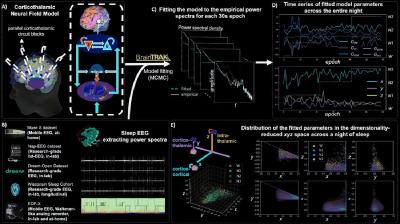
Corticothalamic modelling of sleep neurophysiology with applications to mobile EEG
Recent developments in mathematical modeling of electroencephalography (EEG) enable the tracking of otherwise-inaccessible …
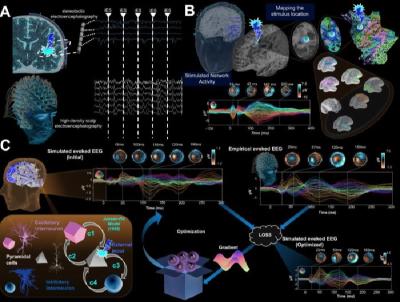
Stimulation mapping and whole-brain modeling reveal gradients of excitability and recurrence in cortical networks
The human brain exhibits a modular and hierarchical structure, spanning low-order sensorimotor to high-order cognitive/affective …
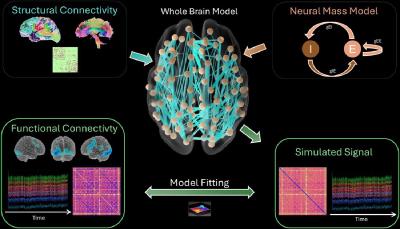
The role of inhibition in resting-state fMRI negative correlations
Resting-state brain activity, as observed via functional magnetic resonance imaging (fMRI), displays non-random fluctuations whose …
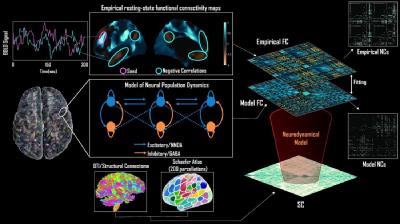
TMS-Evoked Responses Are Driven by Recurrent Large-Scale Network Dynamics
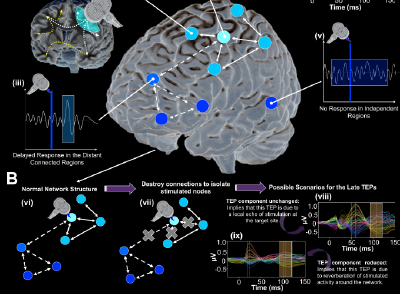
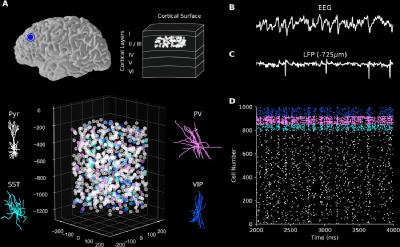
A major question in systems and cognitive neuroscience is to what extent neurostimulation responses are driven by recurrent activity. …
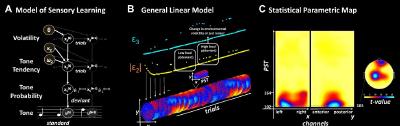
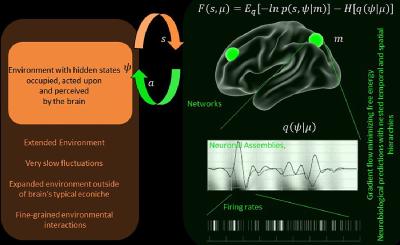
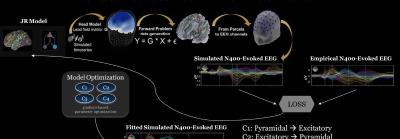
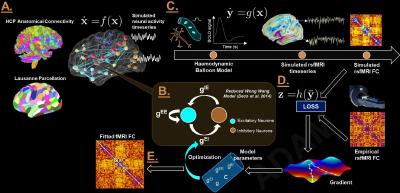
Deep-learning based parameter estimation for neurophysiological models of neuroimaging data
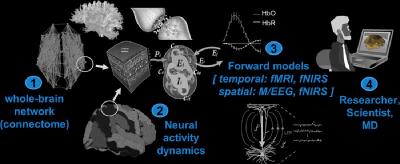
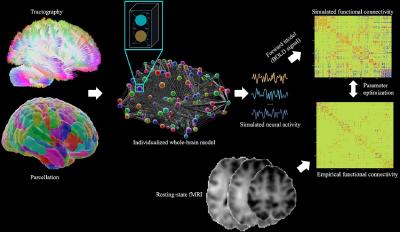
Connectome-based neural mass modelling is the emerging computational neuroscience paradigm for simulating large-scale network dynamics …
Whole-Brain Modelling: Past, Present, and Future
Whole-Brain Modelling is a scientific field with a short history and a long past. Its various disciplinary roots and conceptual …
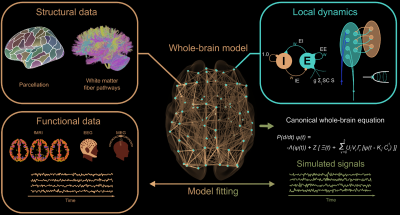
A connectome-based, corticothalamic model of state- and stimulation-dependent modulation of rhythmic neural activity and connectivity
Rhythmic activity in the brain fluctuates with behaviour and cognitive state, through a combination of coexisting and interacting …
Shaping brain rhythms: dynamic and control-theoretic perspectives on periodic brain stimulation for treatment of neurological disorders
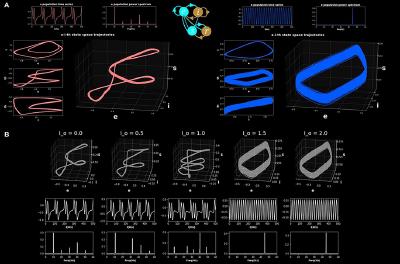
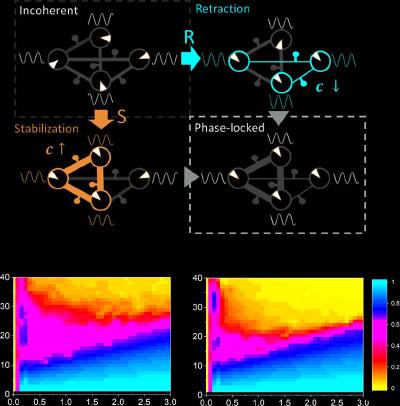
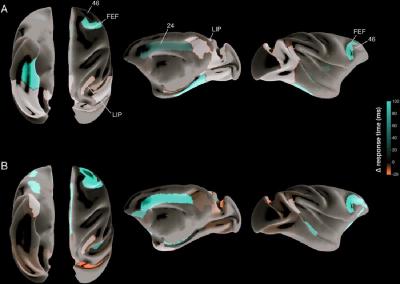
Rhythmic, collective activity is a fundamental feature of neural systems. As a result of this, many of the challenges and opportunities …
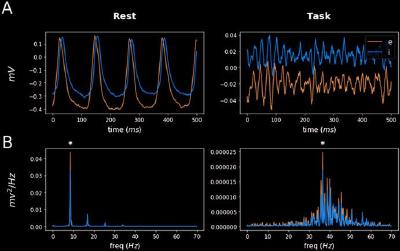
Persistent entrainment in non-linear neural networks with memory
A theoretical study on the phenomenon of persistent entrainment using a mean-field model of recurrent delayed inhibition